


Founder Visibility in the AI Era: How to Build a Strong Personal Brand
Our newsBy Alex Nigmatulin, Chief Innovation Officer at PRNEWS
In B2B, purchasing decisions usually take more time and research than in B2C. Potential customers evaluate a company as a whole: its product, reputation, track record, and the people behind it. That makes a founder’s or CEO’s public profile an important part of the image of the company.
As more people turn to ChatGPT and other AI assistants for information, founders need a consistent presence across the public sources these systems can draw on. Here are four ways founders can strengthen their public presence and improve their visibility in the AI era.
Set up your public profile in owned media
Owned media gives both people and AI systems a primary source of information about a founder. A company website or personal page is meant to present the founder’s professional journey in detail. Without this context, readers may struggle to understand the founder’s background and why their perspective matters.
At a minimum, add the founder’s bio to the company’s “About” page. Google Search Central also recommends making authorship clear and giving readers background information about the people behind the content. For greater control over their public profile, founders can create a standalone website dedicated to their professional background and experience.
AI systems rely on available information to understand who a founder is and what they do. If that information becomes outdated, their public profile may no longer reflect their current expertise. Keeping owned channels up to date helps ensure that the founder is represented accurately. When their role or professional focus changes, update the relevant pages and replace broad labels such as “technology leader” with specific descriptions of their work.
Secure ongoing interviews and contributor coverage across earned and paid media
According to research by the University of Toronto, AI-powered search draws heavily on information from independent publications, review sites, and other authoritative sources. This makes credible media an important channel for building a founder’s personal brand.
AI systems do not distinguish between earned and paid media in the same way people do. What matters is the information available from credible sources and how consistently those sources describe a person or company.
Earned media comes from editorial interest in a founder’s expertise, so building relationships with journalists can lead to interview requests or invitations to contribute articles. What makes things more difficult is the fact that the final decision to publish an article rests with the editorial team. Founders can improve their chances by following developments in their industry and offering comments that add value to a journalist’s story. Over time, these interactions can help establish them as go-to experts in their fields, but even these actions do not guarantee media coverage.
Such unpredictability is the main limitation of earned media. Even a strong pitch may not fit a journalist’s current priorities, and an opportunity can take months to materialise.
Paid media gives founders more control over where and when they appear. A founder preparing to enter a new market, for example, might commission an expert article in a local business publication. Someone building a reputation in a specialised technical field might choose an industry-specific outlet. The right publication depends on the audience the founder wants to reach and the expertise they want to be known for.
Finding suitable publications and arranging placements individually can be as time-consuming as pitching journalists for earned coverage. Platforms such as PRNEWS or Medialister make this process easier by helping founders discover relevant outlets and arrange paid placements through one platform. This allows them to plan coverage around business priorities, securing publication more efficiently.
Combining both earned and paid media gives founders more opportunities to strengthen their public profile. Relationships with journalists can lead to ongoing editorial coverage, while paid placements offer greater control when timing or publication choice matters. Over time, relevant media coverage can help potential customers and AI systems develop a clearer understanding of a founder’s expertise.
Keep your professional profiles up to date on social media
Social media profiles give people and AI systems additional information about a founder’s professional background, current role, and expertise. LinkedIn is a useful starting point because it brings together all the founder’s professional activity in one place. Make sure the profile clearly describes what you do, which industries you know, and the topics you can speak about.
Once the profile is complete, start publishing content that reflects your professional interests. Begin with short posts, commentary on industry developments, and updates on your work. As you establish a consistent publishing routine, introduce more in-depth content, such as lessons learned, informed perspectives on industry challenges, or practical insights for your audience.
It is consistency that helps build a clearer picture of a founder’s expertise over time. Therefore, it is important to keep your profile information aligned with the information about you on your company website and other public sources, and make sure your posts demonstrate the areas of knowledge listed in your bio. This gives people more context about your work and creates a stronger, more coherent public presence for AI systems to draw on when gathering information about you.
Get a Google Knowledge Panel
A Google Knowledge Panel brings together information about a person from public sources and displays it in Google Search results. For founders, it can provide a concise overview of their professional identity, including their background, areas of expertise, and public presence.
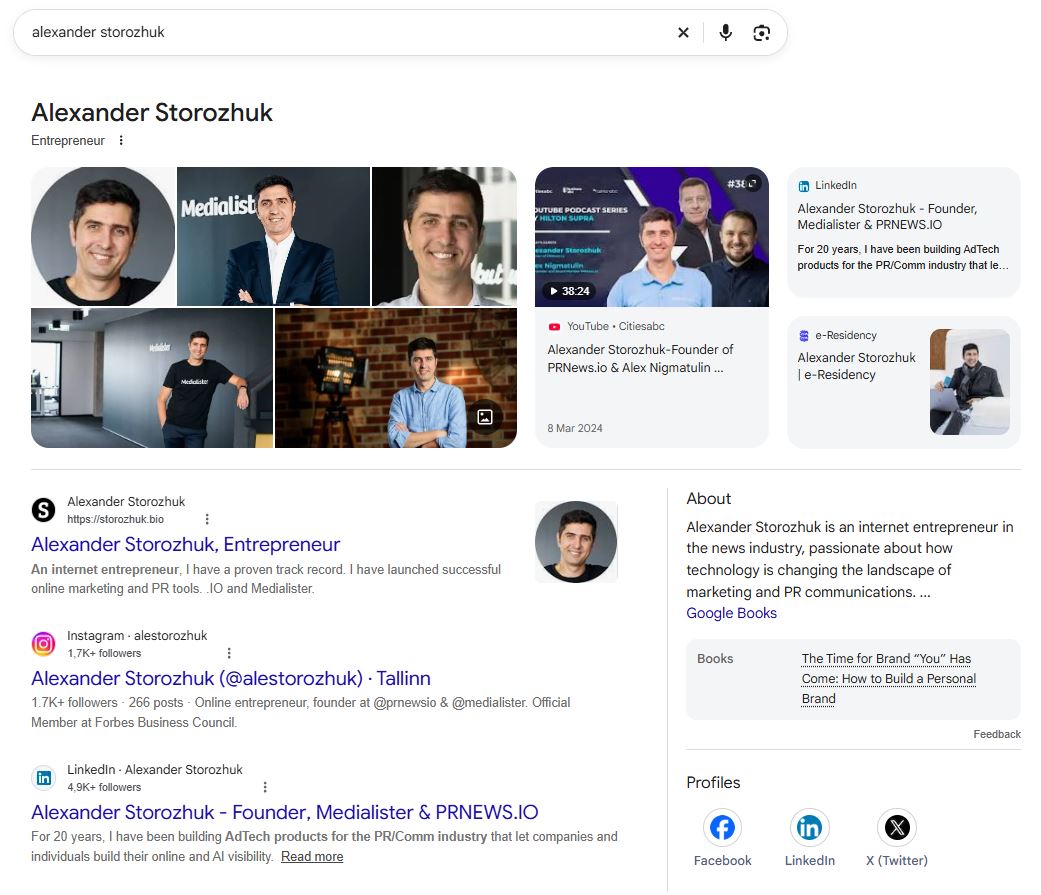
Alexander Storozhuk’s Google Knowledge Panel, Founder of Medialister & PRNEWS
The information displayed in a Knowledge Panel depends on what Google can find across the web. Relevant media coverage, expert commentary, and professional profiles can help build a more complete picture of a founder’s work. However, Google selects information based on its own systems, and there is no guarantee that a particular article or mention will appear in the panel. Focus on credible publications and accurate, consistent information about the founder rather than simply increasing the number of online mentions.
If a Knowledge Panel already exists, review its details and claim it if eligible. Verified individuals can suggest corrections to inaccurate information, helping keep the panel aligned with their current professional profile.
Consistent public presence across multiple channels
A strong founder brand can help build trust in a company and strengthen its reputation. As people increasingly turn to AI tools to research founders and evaluate businesses, a founder’s public presence also shapes what information is available about them online.
Building that presence takes consistent work across several channels: a clear professional profile on the company website, relevant media coverage, up-to-date social profiles, and accurate information in Google Search. These sources give people and AI systems more context about a founder’s background, expertise, and work. The goal is to make that information easy to find, verify, and understand wherever people search for answers.